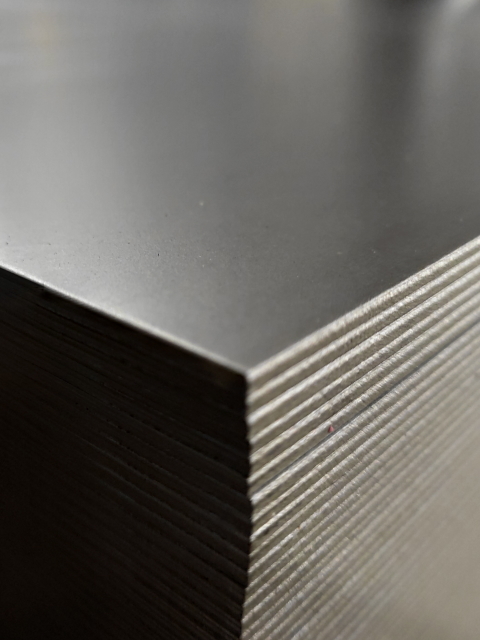
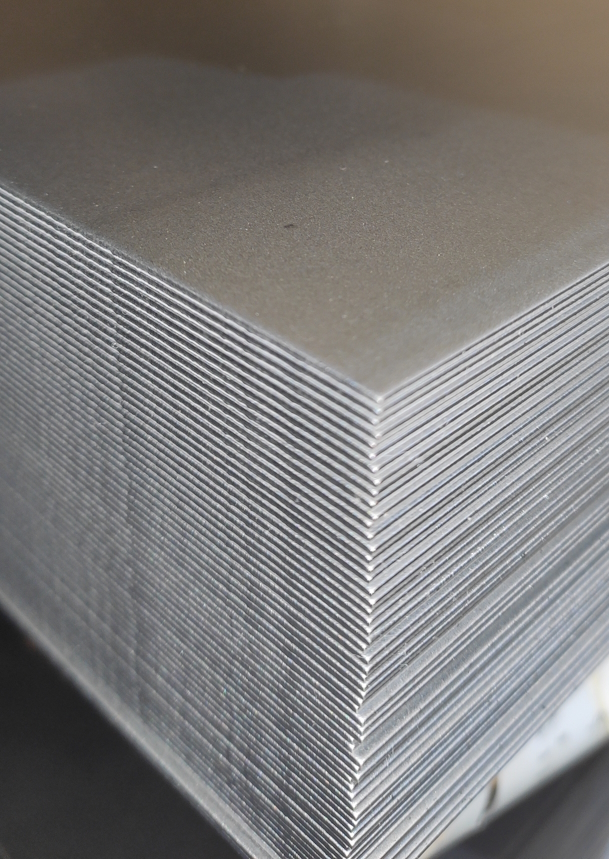
COLD REDUCED
Specification: BS EN 10130:2006 DC01 A- Oiled
Key Features:
- Improved surface finish over hot rolled (clean, oiled and shiny)
- Tight dimensional accuracy
- Excellent malleability and formability for fabrication processes
- Excellent properties for welding
- Large range of sizes and thicknesses from stock
- All CR material can be sheared in our in house facilities
See below for more about CR
Sizes and Thicknesses Stocked
More About Cold reduced
| 0.7 | 0.9 | 1.2 | 1.5 | 2.0 | 2.5 | 3.0 | |
| 2000 x 1000 | X | X | X | X | X | X | X |
| 2000 x 1250 | X | X | X | X | X | ||
| 2500 x 1250 | X | X | X | X | X | X | X |
| 3000 x 1500 | X | X | X | X | X |
All dimensions in millimetres.
These are the sizes which we have in stock at all times available for imeadiate delivery or collection. Other specific lengths available on request. Call us now with your enquiry.
“Cold reduced steel” typically refers to steel that has undergone the cold reduction or cold rolling process. Cold rolling is a manufacturing process used to shape and finish steel at room temperature or below its recrystallization temperature. The process involves passing the steel through a series of rollers to reduce its thickness and improve its surface finish.
Here are key characteristics of cold-reduced steel:
- Temperature:
- The cold rolling process is conducted at or near room temperature. This is in contrast to hot rolling, which occurs at elevated temperatures.
- Reduction in Thickness:
- Cold rolling is primarily employed to reduce the thickness of steel sheets or coils. It achieves a more precise thickness control compared to hot rolling.
- Improved Surface Finish:
- Cold rolling imparts a smooth and polished surface finish to the steel, resulting in a product with a higher quality appearance.
- Increased Strength and Hardness:
- Cold reduction can enhance the mechanical properties of the steel, including increased strength and hardness. This is due to the strain hardening that occurs during the cold rolling process.
- Tight Tolerance and Dimensional Accuracy:
- Cold rolling allows for tighter tolerances and improved dimensional accuracy in the final product, making it suitable for applications where precise dimensions are critical.
- Work Hardening:
- The cold reduction process induces work hardening in the steel, which can affect its ductility. Annealing or other heat treatments may be applied to relieve this hardness if necessary.
Cold-reduced steel finds applications in various industries, including automotive, construction, appliances, and manufacturing, where high precision and surface quality are essential. The specific properties of cold-reduced steel can vary depending on the alloy composition and the details of the cold rolling process employed.